
Visitations
Curated hauntings, uninvited ones, and the quiet genius of hotel horror

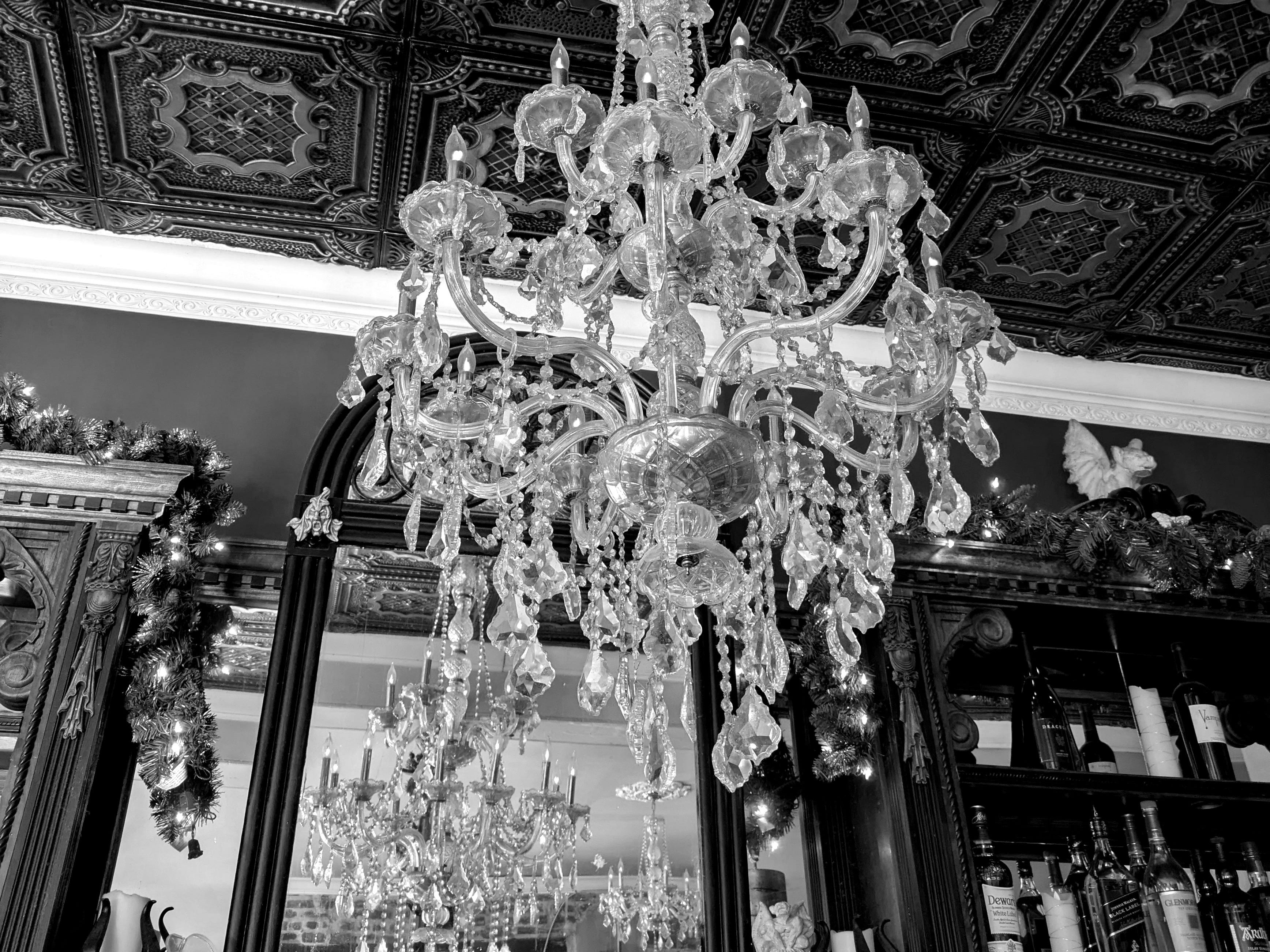
Visitations
Every few years, my husband and I run away from home during Christmastime. This year we disappeared and ended up in New Orleans with a loose itinerary of feasting and wandering, as well as a ghost tour and pilgrimage to one of New Orleans’ less-visited Cities of the Dead: St. Roch Cemetery. And when I spotted a place called Vampire Café, I couldn’t resist. I didn’t go as far as ordering an actual blood bag (surprisingly, my husband did), but I did sink my fangs into a decadent chocolate and praline dessert concoction.
Since we planned to explore by foot, we elected to stay in the French Quarter. I’m easily overstimulated—porous to atmosphere—so I should have known when booking our room that we were too close to the inevitable late-night sounds that last until…well, almost forever. Not everyone visits for the architecture and ironwork, gas-lit lanterns, damp stone, and the arts; plenty come for the revelry, too. (I knew this. I overestimated my earplugs.)
The noise wasn’t the only thing that rattled me.
Decades ago, for a college theater-and-film class, I watched Kubrick’s The Shining on repeat. You’d think I’d be desensitized to the haunted hotel trope. Nope! I can watch and read stories with ghosts and haunted spaces, but I know with absolute certainty that I would never volunteer to spend the night inside one. I also use tarot and pendulums—consensual little doorways to the beyond—but that doesn’t translate into me desiring visitations from the uninvited in my room at night. Or in daylight, if I’m being honest.
I wanted gothic vibes: elastic, haunting, a little baroque around the edges.
Just…not in my actual lodging.
You may remember, dear haunted readers, that I recently riffed ekphrastically on a still life painting featuring a desk “with a permanent midnight bouquet,” and a drawer that mysteriously opened even after being firmly shut. Well, perhaps fiction has a reach I didn’t account for, because my New Orleans hotel room, far from the painting and my imaginative posturing, came with a weathered chimera of furniture: dresser below, desk above, drawers clearly meant for clothes, and a cutout with a chair tucked in, as if the room expected confessional correspondence. The trouble is: I do write such letters by candlelight. The room seemed to know.
And then the drawers began to move.
I’d shut a drawer and walk away. No sound, no scrape, not even the sigh of settling wood to mark the moment of change, but I’d look again and find the top right drawer had crept open a few inches. Or fully open. Or the bottom one on the left side—his side, always; my left-handed lover claims it without discussion—suddenly (suspiciously) askew.
I laughed, because laughter is a charm. “Haunted dresser,” I said, jokingly.
And also, because I am of an age where hormones color everything, I blamed my own fog. The explanations you offer yourself so you don’t become the kind of guest who asks to be relocated to a new room because of misbehaving furniture.
The dresser, immune to laughter, persisted.
We went looking for the macabre the way other people go looking for beignets: in the wild, and curated on purpose. (We skipped the line at Café du Monde. The audacity!) One such staged experience was an after-dark walking ghost tour through the French Quarter—lamplight, lore, and your imagination doing half the work.
In one (re)telling, the Casket Girls, young arrivals sent across the sea, are cast as pale and hidden from sunlight, their little trunks coffin-like enough to become folklore. The legend adds a convent, too: a forbidden upper floor, shutters sealed shut. Ah—cloistered women + containment: an old gothic engine still running at the Old Ursuline Convent.
No wonder I kept thinking about drawers.
New Orleans doesn’t hoard its hauntings. It speaks many of them aloud (sometimes with a brochure and a half-off drink attached).
The afternoon before our last night, a casual conversation with a local in a little eatery opened a hidden stair. They asked where we were staying.
A pause.
“Wow. You’re really brave.”
Then: “That hotel is thought to be very haunted.”
Dear haunted readers: Yes, of course, my already well-fed imagination went looking for more. I turned to the forbidden archive. I Googled. It was a mistake.
It is remarkable how quickly a room changes once someone tells you what to see.
I found stories. Anecdotes. And I found one review that someone (me) should perhaps not read in bed: pressure, paralysis, a presence; then a grinning figure in the bed beside the guest…
I will not reproduce the whole thing here, for one does not recite such passages without inviting them to stay. While I wasn’t in the room with the aforementioned account, I was just a few doors down. And ghosts can go through walls, right?
Or, at the very least, an idea can.
It did occur to me: in some respects, I was the one who checked in uninvited.
That evening, our last night of vulnerability, I performed a little protection spell and, for good measure, committed to not opening my eyes unless absolutely necessary. The bathroom, as we all know, is such a necessity.
So I did the only reasonable thing someone does with both an overactive imagination and a partner: I woke my husband and asked him to accompany me. He rose, half-asleep, without question.
Love, I learned, includes this: Yes, he will accompany you to the bathroom because the hotel has a scary TripAdvisor paper trail.
Nothing happened: the corridor did not bloom with spectres and the mirror didn’t betray me (full disclosure: I avoided the mirror as much as possible).
And the dresser? The drawers stopped opening. As if the room knew I knew, and went still to prove it.
This is, perhaps, the genius of hotel horror: the building doesn’t actually have to do anything at all once it has persuaded your attention to take up residence.
Gothic in a nutshell? The mind can furnish a room.
Questions from the Corridor
Dear haunted readers, before I attempt to recreate a few culinary delights from our trip (confession: I will do most of the eating; the left-handed one is brilliant in the kitchen), I leave you with a few questions:
Would you intentionally spend the night in a “haunted” hotel…or is that a bolt-the-door no?
What’s the closest you’ve come to a “visitation,” and what arrived first: a feeling, a sound, a shape, a shift in the room?
What do you recommend for a read or watch, for anyone collecting haunted rooms…from a distance?
Thanks for reading and being here.
This house breathes a bit differently with you in it.
From the corridor (porous to atmosphere),
Chandler
P.S. The Stanley Hotel—yes, that haunted-hotel stop on The Shining itinerary—is only fifty-some miles from my nest. Have I stayed the night? Have you been paying attention? :)
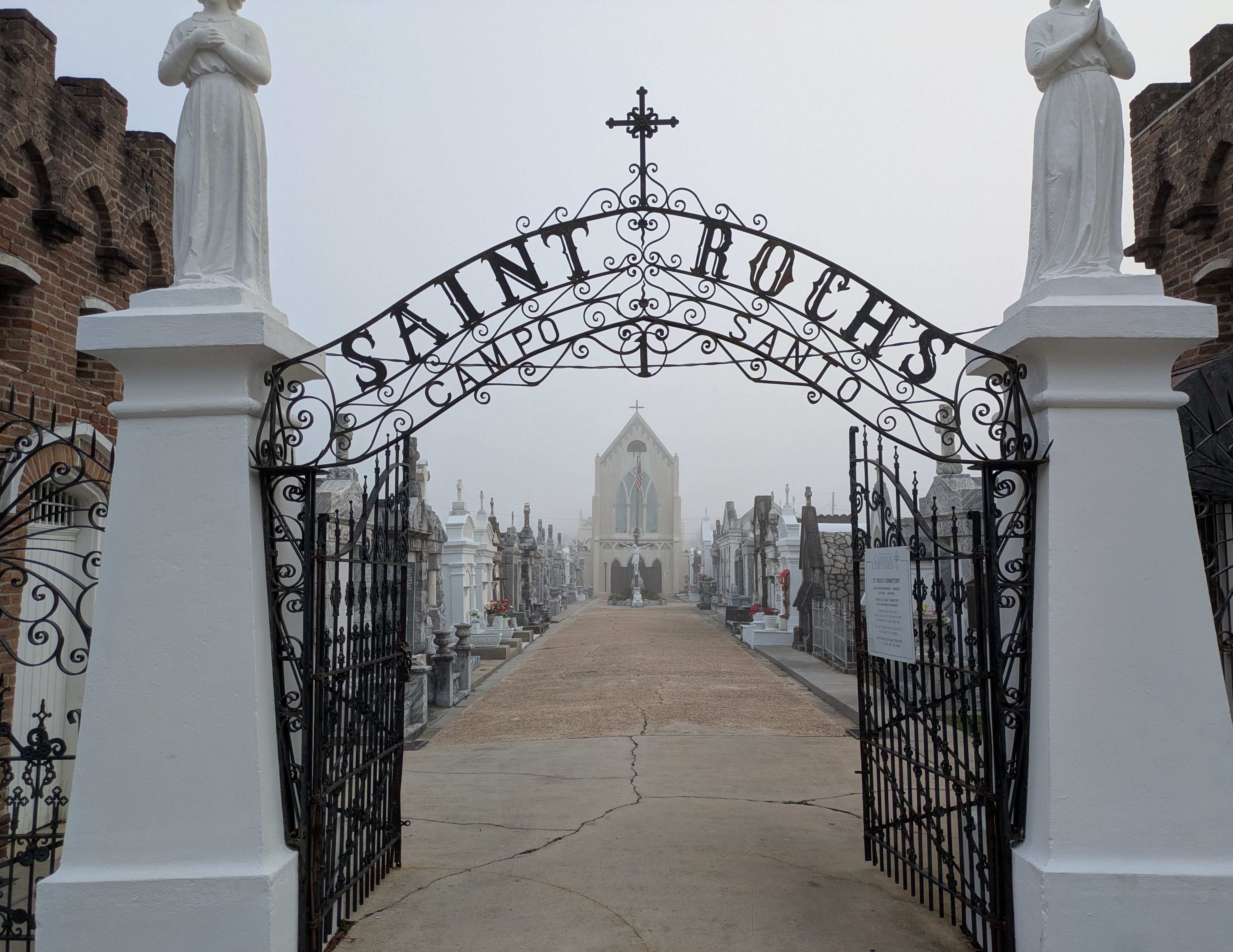
P.P.S. St. Roch Cemetery has its own rumored resident: a big black dog that shows up between the tombs and then disappears. Now, that’s a visitation I’d volunteer to see.
Ink of Grey is an immersive gothic project: part experiential syllabus, part séance, part symbolic excavation in the shape of a house.
Subscribe to receive posts when they appear—by candlelight.
Oh my gosh I ate this up with abandon ! How wonderfully creaky and atmospheric . Thank you for taking me to New Orléans . I went there for my honeymoon - we stayed in a guest house which was so southern gothic , I struggled to sleep .
That drawer 😱
We did stay in a haunted hotel last week and I think we were woken up by the sounds of a drunken 18th highway man smashing the bar 😂 ( true story ).
Amazing words thank you - I just love the line ‘the building doesn’t actually have to do anything at all once it has persuaded your attention to take up residence.’ Love it .
Brillaint observation about how hotel horror weaponizes attention itself. The piece really captures how knowing something is "haunted" transforms perception, and what stands out is the lack of consent aspect, you sought curated gothic (tours, cemeteries) but got uninvited visitations instead. I had a similat thing happen in Prague where I didnt know the hotel history until after checkout. Once attention takes up residence the building barely has to participate anymore.